
Sewer Camera Inspection in Pflugerville
Last updated: 30 September 2026.
Stop guessing what’s inside your pipes. A sewer camera inspection shows exactly what’s causing the backup, where it is and what it will take to fix, before you spend money on the wrong repair. Pflugerville Drain Cleaning runs sewer camera inspections across Pflugerville, Wells Branch, Hutto and Round Rock.
Hours: Monday to Saturday, 7 AM to 7 PM. Emergency calls answered 24/7.
Get a callback today
How a Sewer Camera Inspection Works
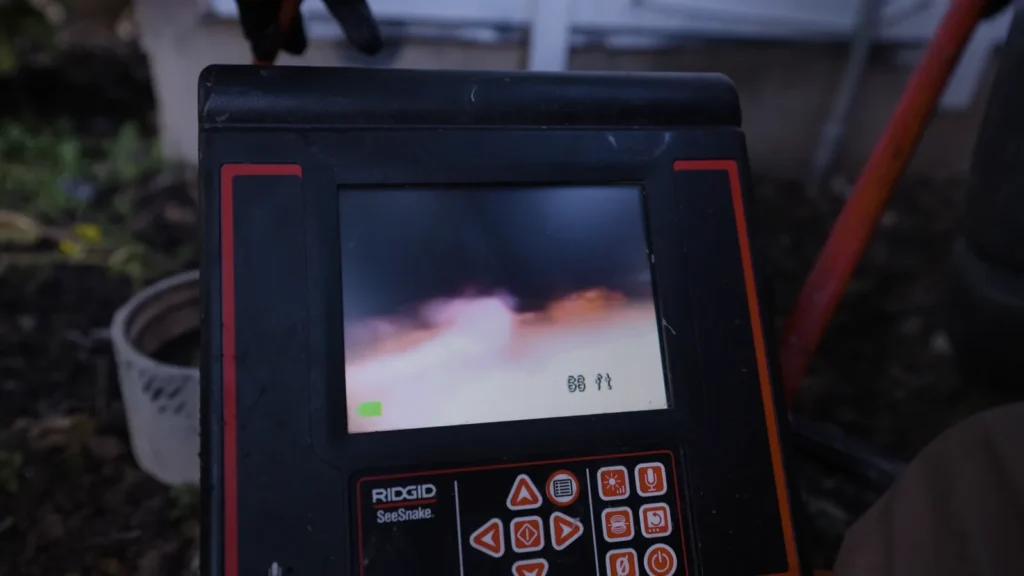
We feed a small waterproof camera on a flexible cable into the line through a cleanout or drain opening. The camera has its own lights. As it moves through the pipe, it sends live video to a screen above ground.
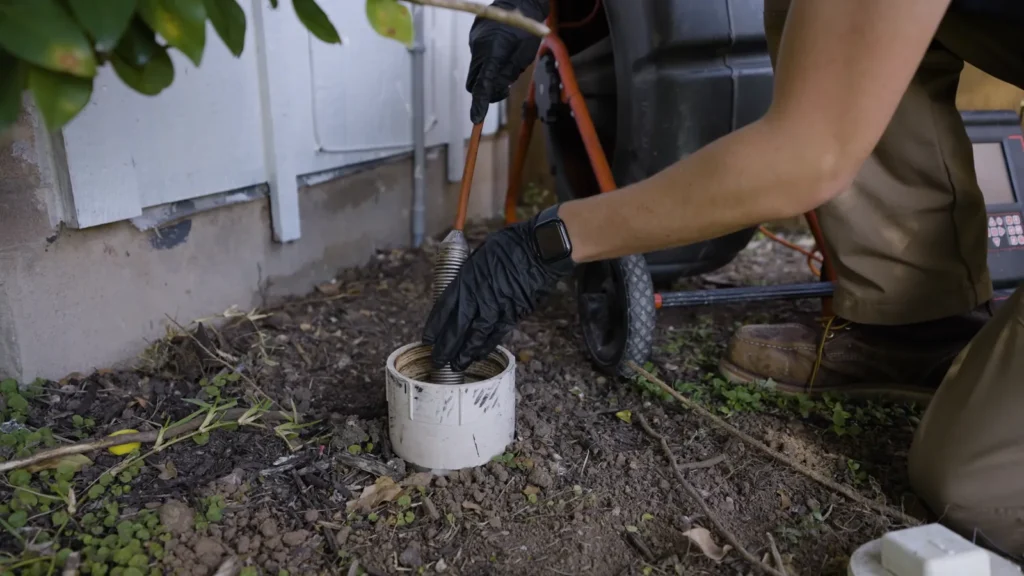
The cable is marked by distance, so we know how far the camera has traveled. A locator lets us find the camera’s spot from above ground. That means we can mark exactly where a problem is in the yard or under the slab.
You can watch the screen with us. We’ll point out what we see as we go.
What the Camera Can Find
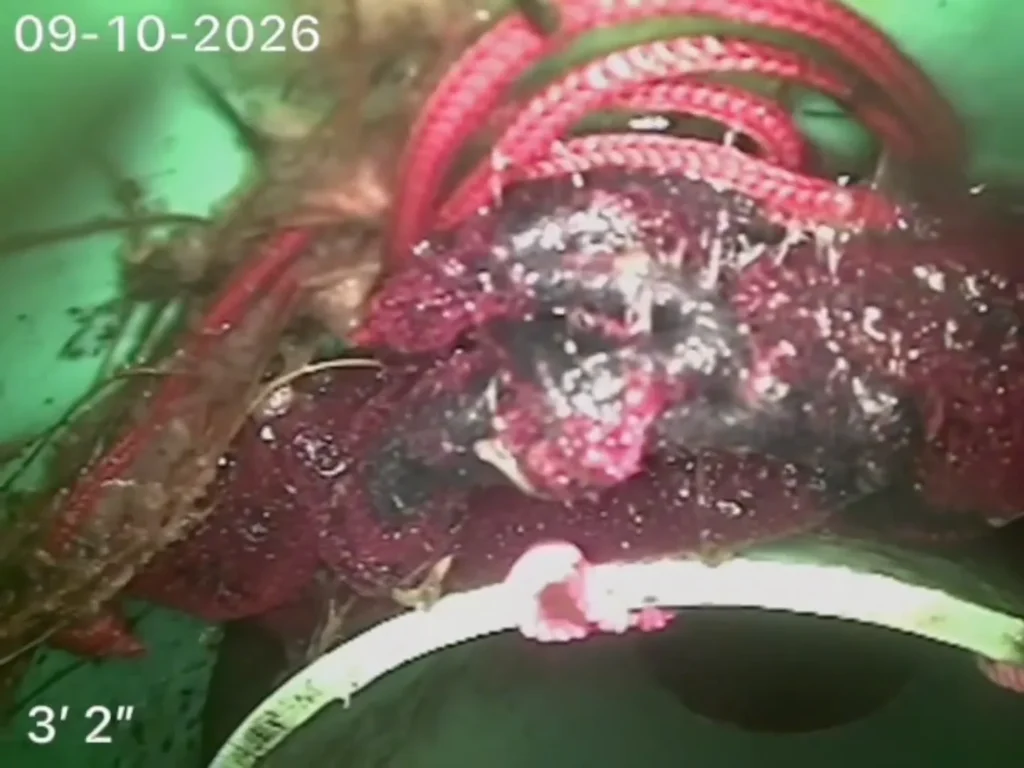
Pflugerville sits on clay soil that swells when wet and shrinks when dry. That movement can shift pipe joints over time and give roots a way in. A camera is the only way to see it without digging.
What Pipe Materials Are Under Pflugerville Homes?
Clay pipe causes most of the sewer line trouble in Pflugerville. It comes in short sections joined end to end, and every joint is a gap where tree roots get in. The clay soil here swells and shrinks with the seasons, which works those joints further apart each year.
Newer subdivisions across 78660 and 78691 run PVC. White plastic, smooth walls, glued joints. It holds up well, so a problem in a PVC line is usually a blockage rather than a failing pipe.
Older homes closer to the original town center often have cast iron. It rusts from the inside out over decades. On camera the wall looks rough and scaled, and debris catches on it. A cast iron line running slow is frequently narrowing, not clogged.
Most houses here sit on a slab foundation, and settling on clay soil cracks pipe joints. Settling plus tree root intrusion is behind most of the repeat backups we see in older parts of town.
The material changes what happens next. Roots in a clay joint come back unless the joint itself gets dealt with. Scale in cast iron responds well to hydro jetting. A blockage in PVC is usually a one-time clear.
When You Need a Camera Inspection
Recommended
Worth doing
Usually not needed
A single, one-time clog in a bathroom sink that clears easily and stays clear. That’s a standard residential drain cleaning job.
Why a Camera Inspection Prevents Repeat Problems
Snaking a drain without looking inside is a guess. It may clear the clog, but it won’t tell you why it happened. If the cause is a root, a belly or a broken joint, the clog will come back.
When we can see the cause, we can recommend the right fix:
You pay for the fix that works, not three visits for the same problem.
What to Expect During Your Inspection
Find access
We look for a cleanout outside or inside the house. If there’s no cleanout, we may go in through a toilet drain or roof vent.
Run the camera
We push the camera through the line and record the video. Most home lines take about 30 to 60 minutes.
Locate problem spots
If we find damage, we mark its location and depth from above ground.
Review the footage with you
We walk you through what we saw in plain language.
Share the recording
You can ask for a copy of the video to keep for your records, a home sale or an insurance claim.
What Happens After the Inspection?
The footage decides the fix. Once we know whether you have roots, grease, a soft stoppage or a broken pipe, the right method is obvious. Looking first is what stops you paying for the same cabling visit three times a year.
Roots at a joint. Cutting them clears the line today and they grow back. Hydro jetting strips them further and buys more time. The recording shows how far the joint has opened and whether repair makes sense yet.
Grease or scale coating the walls. Jetting scours it off and gets the pipe back close to its original diameter.
A soft stoppage. Cabling clears it and nothing else is needed. Most kitchen line clogs in Pflugerville homes fall here.
A belly, where a section has sagged and water pools in it. No cleaning method fixes a belly. It takes excavation and re-laying. The camera finds it and marks the depth, so you get a real quote instead of a guess.
A broken or offset joint. Same story. Cleaning buys time, repair solves it.
You keep the recording either way, and we walk you through what is on it before we leave.
How Much Does a Sewer Camera Inspection Cost in Pflugerville?
Most Pflugerville homeowners pay $150 to $500 for a sewer camera inspection when the property has a cleanout. Without one, expect $175 to $750, because a toilet has to come off to reach the line. Adding a scope to a home inspection runs $100 to $250.
What you pay comes down to how we get the camera into the line, and how far it has to travel.
| Situation | Typical range |
|---|---|
| Cleanout on the property | $150 to $500 |
| No cleanout, toilet removed | $175 to $750 |
| Added to a home inspection | $100 to $250 |
| Time on site | About 1 hour |
Some national cost guides quote Austin averages above $1,500. Those figures fold in long lines, damaged clay pipe and specialty cameras, so they run high for a straightforward inspection in 78660 or 78691.
Four things push the price up. Line length, since a standard camera reaches around 330 feet and longer runs take longer. No cleanout. Older pipe material, because clay and cast iron slow the camera down and need closer review. And scheduling, since same-day and after-hours work costs more than a weekday appointment.
Booking the inspection alongside a drain cleaning costs less than booking it on its own. We are already at your house with the line open.
We quote the inspection before we start, with no hidden fees. Call 512-710-2599 to book. For businesses, see commercial drain cleaning. Or head back to drain cleaning in Pflugerville.
What a Camera Inspection Will Not Tell You
A camera shows the inside of the pipe and nothing else. It will not measure how much wall thickness is left, find a leak outside the pipe, or price a repair on its own. Knowing those limits before you book keeps expectations straight.
- It does not measure pipe wall thickness. A cast iron line looks rough on screen whether it has ten years left or two.
- It does not find leaks outside the pipe. Water escaping through a hairline crack shows up as a wet patch in the yard, not on the monitor.
- It stops at blockages. If the line is packed solid, the camera reaches the clog and goes no further, so we clear first and inspect second.
- It does not price a repair by itself. The footage gives you the problem and the location. A quote still needs someone to work out access and depth.
Frequently Asked Questions
See What’s Really Inside Your Pipes
Book a camera inspection and get a clear answer before you pay for a repair.
Call 512-710-2599. Monday to Saturday, 7 AM to 7 PM, with emergency calls answered 24/7.